Call and Come: Four Small Experiments to Teach Your Cat to Respond to Their Name
Why small experiments work
Teaching a cat to come when called is best treated as a series of small, measurable experiments rather than a single lesson. Each experiment tests one principle—association, timing, motivation, and generalization—and gives you quick feedback. Sessions are short, predictable, and fun for the cat, which improves learning.
General notes before starting
- Use high-value rewards (tiny bits of wet food, cooked fish, or a favored treat). Play can be a reward if your cat prefers it.
- Keep sessions to 3–5 minutes, 3–5 times a day. End while your cat is still engaged.
- Always call using the same short cue (one name plus a short word, e.g., « Milo, come »). Say the name once and pause—avoid repeated shouting.
- Record one simple metric per session: the percentage of trials where the cat approaches within 3 seconds.
Experiment 1 — Name association (5–10 minutes per session, 3 days)
Principle: a name predicts a reward. Goal: cat looks toward you when you say their name.
- Sit on the floor with a pile of tiny treats. Say the cat’s name once in a neutral tone. The moment the cat looks at you, give one treat. Mark with a consistent noise (clicker or small « yes »).
- If the cat doesn’t look, lower the criterion: any head turn, ear twitch, or look in your direction earns the reward.
- Do 10 trials per session. If successful on 7/10 trials by day 3, proceed to Experiment 2.
Example: On trial 4 the cat glances and you mark and reward within 0.5 seconds. This fast feedback strengthens the association between name and reward.
Experiment 2 — Short-distance recall (5 minutes, 3–5 days)
Principle: link the name to movement by rewarding approach. Goal: cat comes 1–2 meters when called.
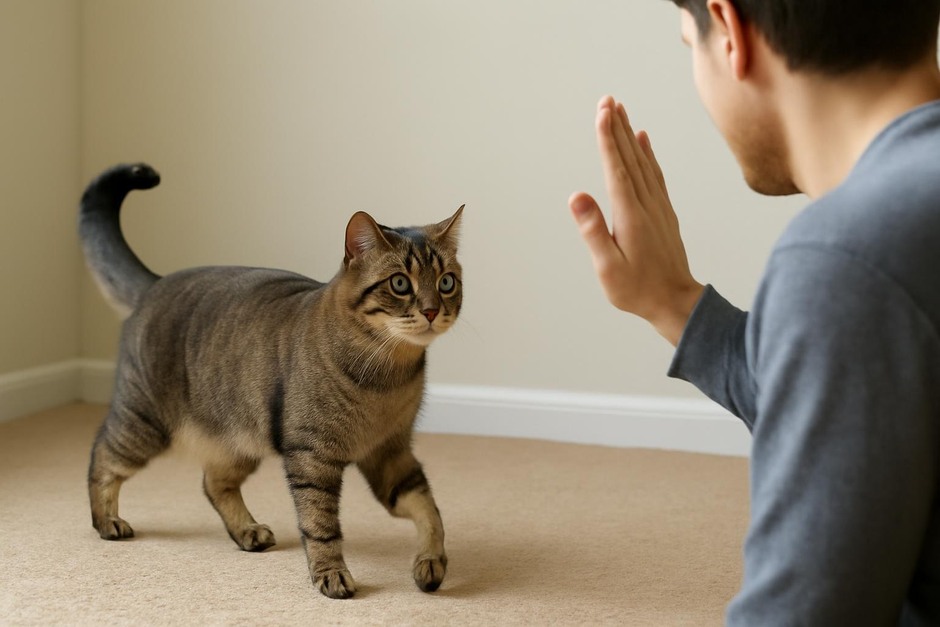
- Start with the cat on the ground and you seated 1–2 meters away. Say the name once. When the cat takes one step toward you, mark and reward at the moment of movement.
- Gradually raise the criterion: first one step, then two steps, then reaching you. Continually reward partial successes.
- Repeat 8–12 trials per session. Track speed: success if cat reaches you within 5–10 seconds on 7/10 trials by day 5.
Tip: use a hallway or narrow space to reduce distractions. If the cat hesitates, sit on the floor and make the reward visible to increase motivation.
Experiment 3 — Add mild distractions and variable rewards (5–10 minutes, 5–7 days)
Principle: robustness comes from practicing under slight challenge and varying the reward schedule. Goal: cat comes reliably with light distractions.
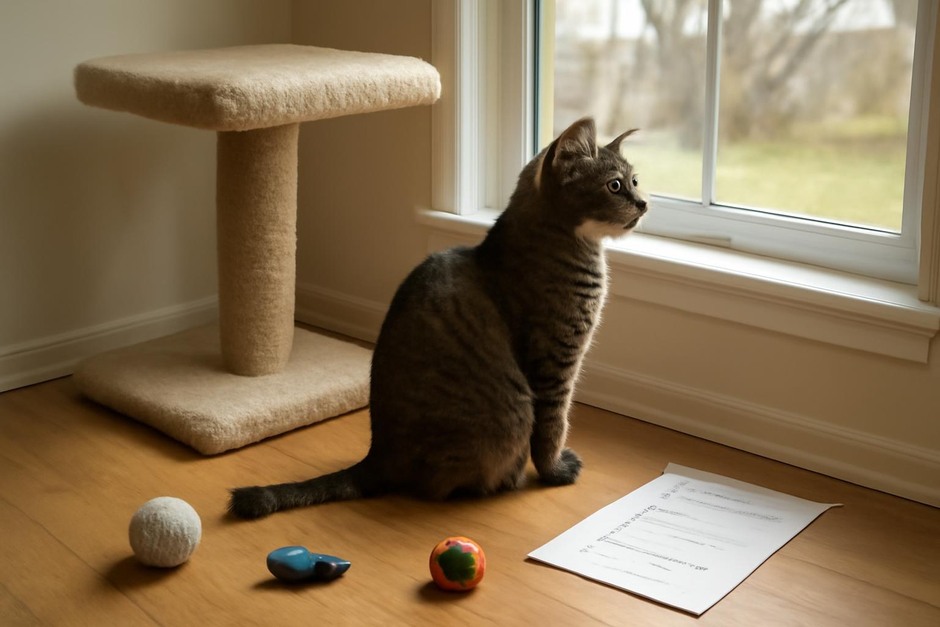
- Conduct sessions where a toy is visible nearby or another family member moves slowly in the background. Call the name and reward when the cat comes.
- Use a variable-reward pattern: sometimes a treat, sometimes a quick play session, occasionally a high-value treat. This increases persistence.
- Don’t escalate distractions too fast—only increase when the cat is reliably coming in undistracted trials.
Example: mix 6 food rewards, 3 play rewards, and 1 extra-tasty reward in a 10-trial session. Note whether the cat maintains response rate despite the toy nearby.
Experiment 4 — Generalize across spaces and people (5–10 minutes, ongoing)
Principle: generalization requires practice in multiple contexts and with different callers. Goal: cat comes from different rooms and to different household members using the same cue.
- Have another person call the same cue from a different room. Use identical timing and reward style. Begin close, then increase distance.
- Practice in several rooms, with doors partly closed, and during everyday routines (before feeding, when guests arrive—but avoid making calling only a prelude to something the cat dislikes).
- Keep sessions frequent but short; reinforce successes and reduce treat frequency over weeks while keeping intermittent high-value rewards.
Troubleshooting
- If the cat freezes or hides, reduce criteria: reward any movement toward you and increase treat value.
- If the cat ignores the cue, check motivation—try training pre-meal when hunger is mild, or use a favorite toy as reward.
- If the response occurs only with one person, have other household members repeat earlier experiments until they get similar success rates.
Measuring progress
Keep a simple log: date, location, caller, number of trials, percent success, and average time to respond. Over two weeks you should see improvement in speed and consistency. Celebrate small gains and remember that steady, positive practice builds a reliable recall.
These four experiments—name association, short-distance recall, distraction training, and generalization—connect clear training principles to brief, repeatable exercises. Through short, focused sessions you can shape a useful skill while keeping the experience enjoyable for both you and your cat.